Inside St Mark's Basilica
The mosaics, the golden altarpiece, the rood screen and the chapels, and which parts need a separate ticket.
- Route of up to 20 minutes
- Pala d'Oro on its own ticket
- Mosaics begun 1071–1084
Official Tiqets partnerBest booked in advance
Skip the line + live guide
- Ticket on your phone
- Sent to you instantly
- Free cancellation up to 48 hours before
- Tiqets support 24/7
In short
- The basic ticket covers a fenced route of up to 20 minutes through the church; the Pala d'Oro, the Museum and the Horses' Loggia are paid extras.
- Mosaic decoration began in 1071–1084, under Doge Domenico Selvo.
- The Pala d'Oro is 3.34 m wide and 2.12 m high, with about 250 cloisonné enamels and 1,927 gems.
- The rood screen, dated 1394, carries 14 marble statues by Jacobello and Pierpaolo dalle Masegne.
- The four original bronze horses have been in the Museum since 1982; those on the loggia outside are copies.
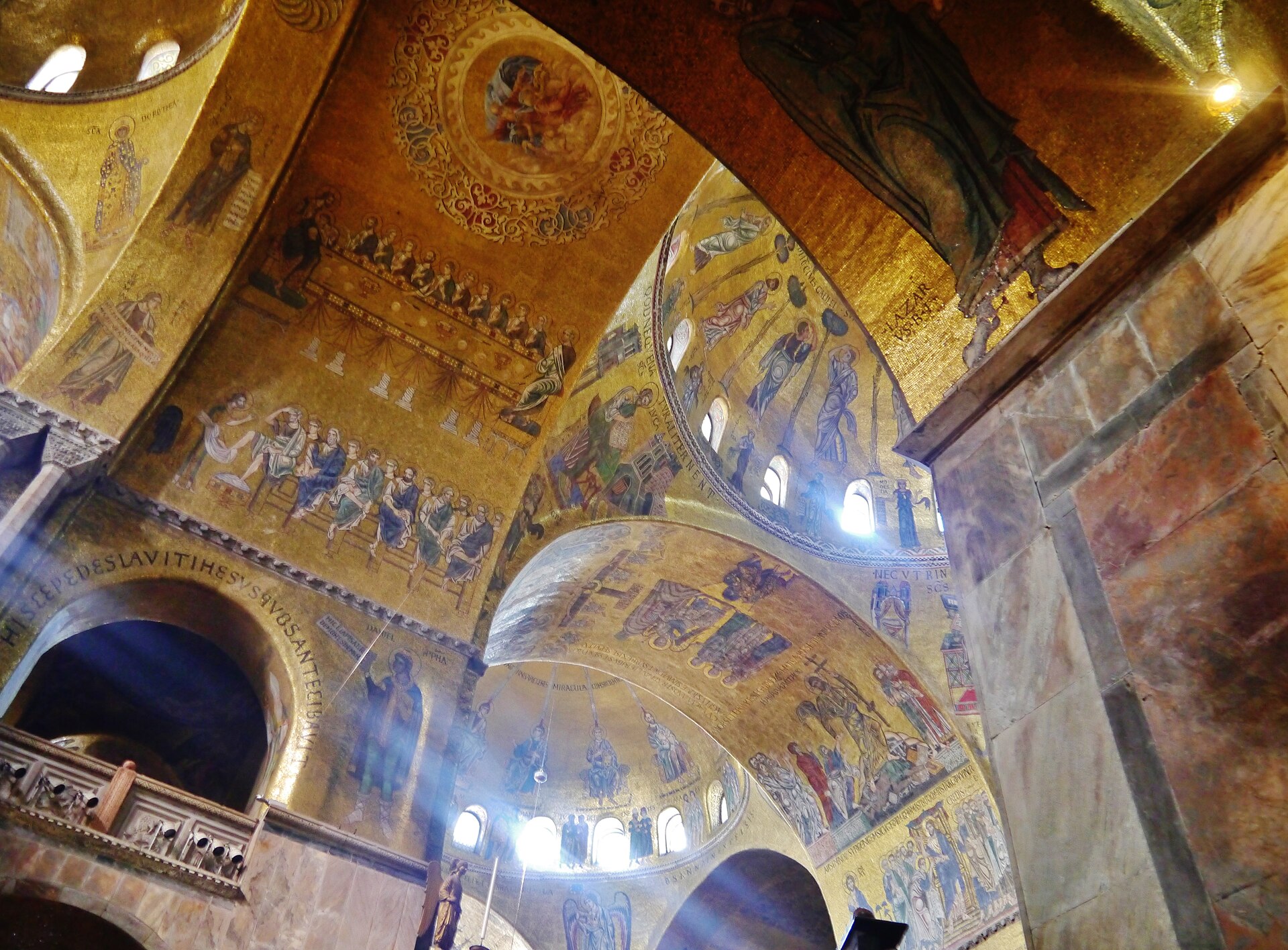
Inside St Mark's Basilica you walk under domes and vaults lined with gold-ground mosaics, past a marble rood screen of 1394, towards the Pala d'Oro, an altarpiece of enamels and gems. The standard ticket covers a fenced route through the church that lasts at most 20 minutes. The Pala d'Oro, the Museum and the Horses' Loggia upstairs each need an extra ticket, so it helps to know what you want to see before you book.
What does the standard route cover?
The basic Basilica ticket (€10 full price) takes you along a fenced route through the church. The access rules set a maximum of 20 minutes, without detours or stops that hold up other visitors. That is enough to take in the mosaics overhead, the nave and the rood screen, but not to linger.
If you want a fuller visit, the options are:
- the Pala d'Oro, an extra ticket with its own limit of 10 minutes;
- the Museum and Horses' Loggia upstairs, above the narthex, where the original bronze horses are kept and the loggia opens over St Mark's Square;
- an audio guide, which you can hire at the desk just past the entrance turnstile;
- a guided tour, where a guide walks you through and explains the scenes (see guided tours).
Prices for each combination are on the tickets page.
The mosaics
The Basilica's own chronology dates the start of the mosaic decoration to 1071–1084, under Doge Domenico Selvo, a few years after work on the present church began in 1063. That date marks the beginning of the work, not its end.
Look up as you walk. The mosaics fill the domes, arches and walls, and many of them tell stories, among them the arrival of St Mark's body in Venice (the story is on our page about St Mark).
A detail you see better from outside: the tall domes on the skyline are 13th-century wooden structures covered with overlapping sheets of lead, built on top of the original brick domes. The domes you look up into from the nave are those lower brick ones.
The Pala d'Oro
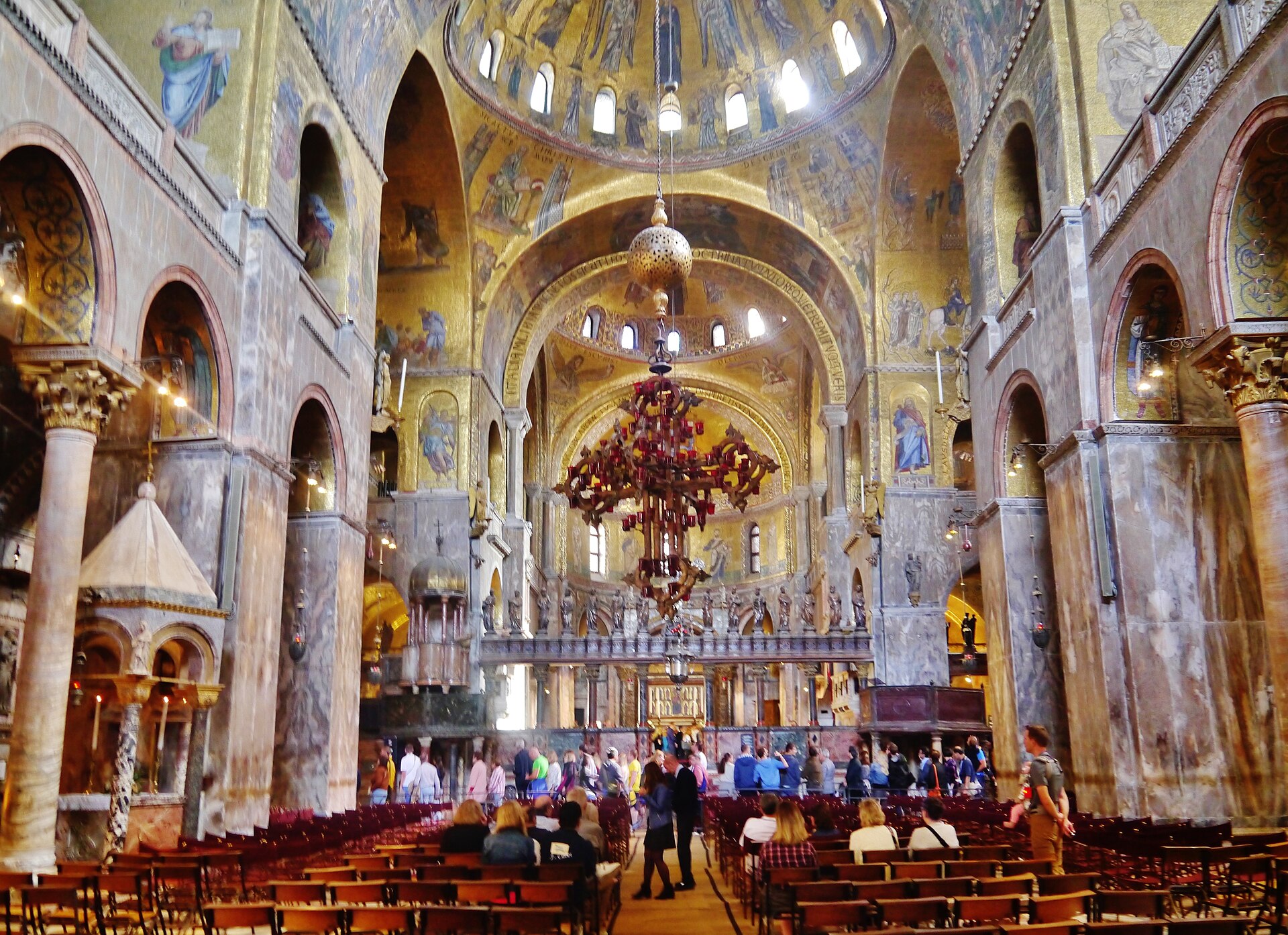
The Pala d'Oro is 3.34 metres wide and 2.12 metres high, made of about 250 cloisonné enamels on gilded silver sheet and set with 1,927 precious stones and gems. It took shape in phases:
- the lower part dates from the time of Doge Ordelaffo Falier (1102–1118);
- an inscription records that it was renewed in 1209, under Doge Pietro Ziani;
- in 1343–1345, under Doge Andrea Dandolo, it was remade entirely and took the appearance it has today.
Some of its enamels arrived from Constantinople after 1204. Until 1958 the Pala faced the nave; since then, at the request of Patriarch Angelo Roncalli, a mechanism turns it, so that it normally faces away from the nave, towards the visitors who come to see it. The painted panel that once covered it on ordinary days, by Paolo Veneziano and his sons (1343–1345), is now in the Museum.
The Pala d'Oro costs extra (€20 with the Basilica, €30 in the full ticket) and the visit lasts up to 10 minutes. More on the Pala d'Oro.
The rood screen and the Nicopeia
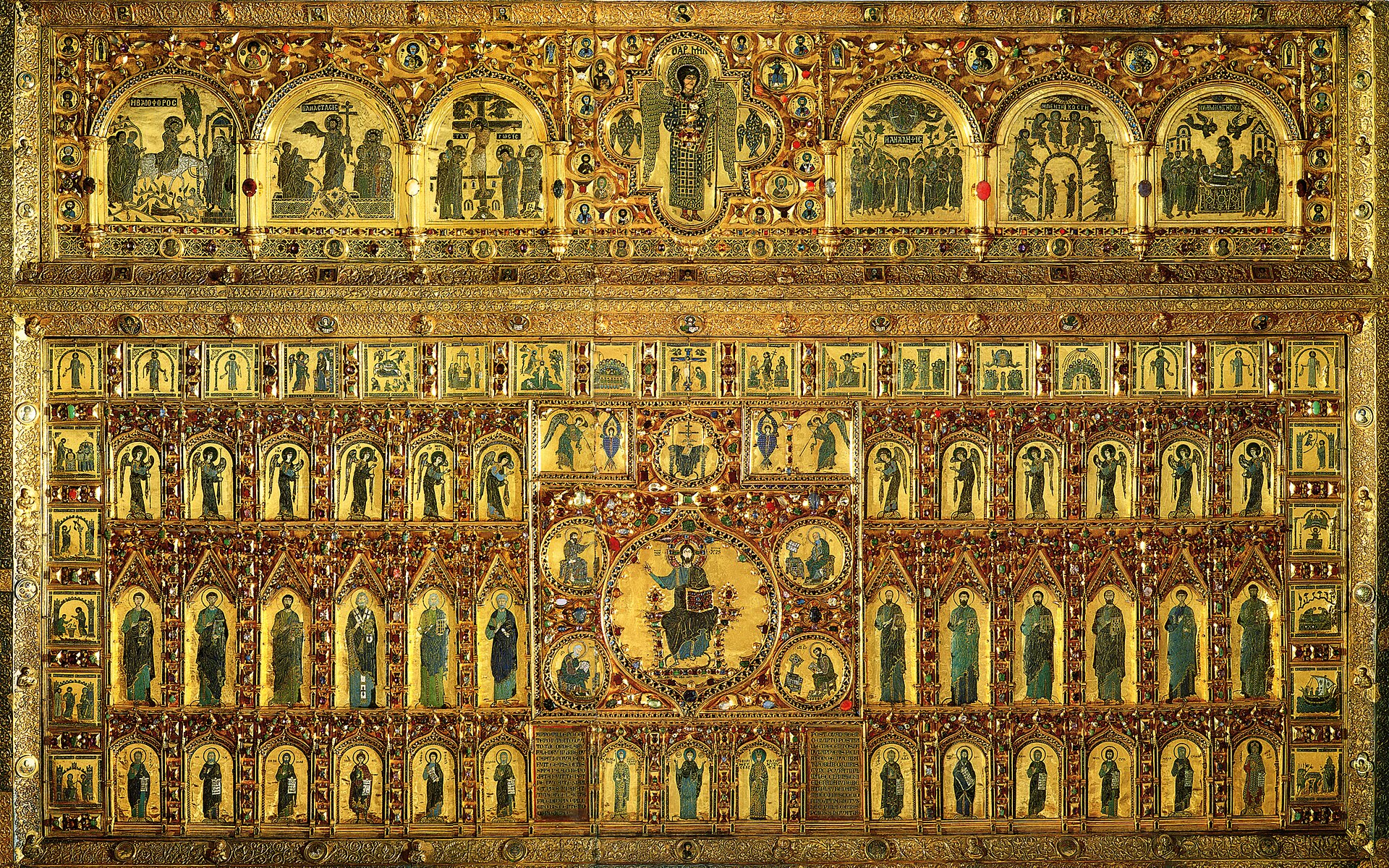
The marble screen that separates the presbytery from the rest of the church carries the date 1394 and the signatures of Pierpaolo and Jacobello dalle Masegne. Its 14 statues show the twelve Apostles, the Virgin and St Mark.
The Madonna Nicopeia, an icon brought to Venice after the conquest of Constantinople in 1204, has its own altar. From Monday to Saturday the morning Masses are celebrated there, at 8am and 10am. For reasons of worship, the 10–10.30am visitor slot is no longer sold.
Chapels, baptistery and atrium
Several parts of the church were added long after the main building:
- The Baptistery and the Chapel of Sant'Isidoro were built in 1343–1354 under Doge Andrea Dandolo. The font was designed by Jacopo Sansovino, the Basilica's chief architect (proto) from 1527 to 1570, who is buried at the foot of the baptistery altar.
- The Zen Chapel was built in 1504–1521 in the right arm of the atrium, and in doing so closed off the grand doorway that once opened towards the lagoon.
- The atrium floor carries the names of the protagonists of the Peace of Venice of 1177, Pope Alexander III and Emperor Frederick Barbarossa, an event that took place in the Basilica.
The official pages don't say which chapels the daytime route passes, so if one of them matters to you, a guided tour is the surest way to have it pointed out.
The Treasury
The Treasury holds 283 pieces in gold, silver, glass and other precious materials. A fire on 13 January 1231 destroyed the room that housed it, sparing only four reliquaries. More on the Treasury and relics.
The Museum and the horses
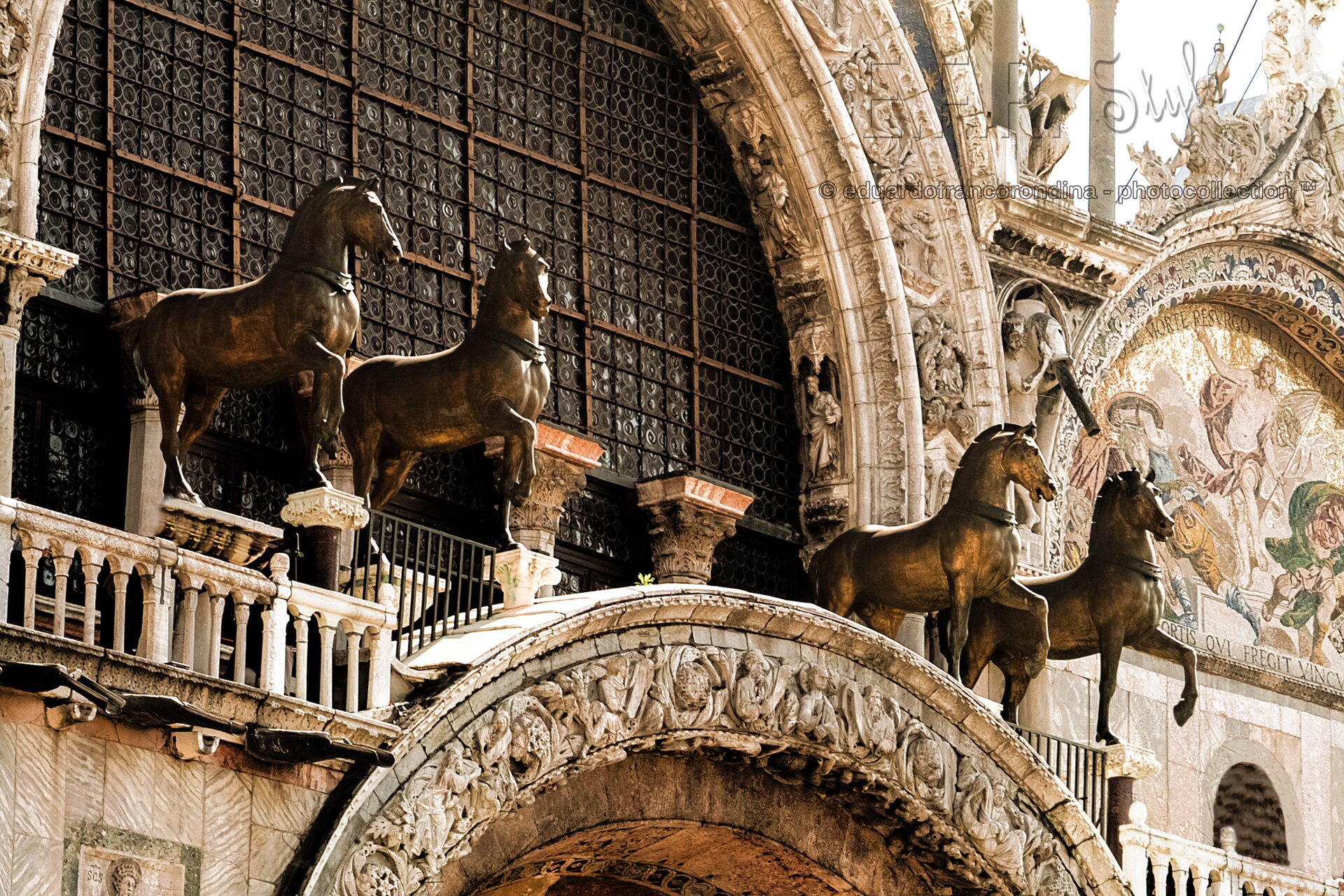
The Museum occupies the floor above the narthex and opened to the public on 16 May 1927; its current layout was inaugurated on 8 October 2003. Its best-known pieces are the four bronze horses brought from Constantinople after 1204, probably from the Hippodrome. They are made of a copper alloy gilded with mercury, and their date is uncertain: some scholars place them between the second half of the 2nd and the early 3rd century AD.
The horses stood on the loggia from after 1261 until 1977. After restoration they were moved indoors in 1982, and bronze copies took their place outside. From the loggia you look straight down on St Mark's Square. More on the Museum and Horses' Loggia.
Can you see the crypt?
The crypt, where the body of St Mark was placed in 1094, is part of the Procuratoria's private evening visits, which are booked by groups with a guide. The official pages don't list it as part of the daytime ticket. Partner after-hours tours are on our after-hours page.
Tips for seeing more in 20 minutes
- Read up before you go: you can't stop for long on the route. Our history page gives the key dates.
- Photos are allowed for personal use only, without tripods or professional equipment (rules).
- Choose the full ticket if you want the Pala d'Oro and the horses as well; the Campanile is separate.
- A guide makes the most difference here: the mosaics are dense with stories that are easy to miss on your own.
Tickets and tours
 Our pick
St. Mark's Basilica: Skip The Line Ticket + Guided Tour
★ 3.8 (991)Free cancellation up to 48 hours before
Official Tiqets partnerfrom €28.80
Check availability
St. Mark's Basilica: Hosted Entry Ticket + Terrace Access
★ 3.3 (283)
Official Tiqets partnerfrom €50
Check availability
St. Mark's Basilica: Guided Tour + Terrace Access
★ 4.2 (293)
Official Tiqets partnerfrom €58
Check availability
Prices are per adult, as a guide, refreshed daily from the partner; you see the final price on the partner's site before paying.
Frequently asked questions
What is inside St Mark's Basilica?
How long does it take to see inside St Mark's Basilica?
Is the Pala d'Oro included in the basic ticket?
Can you visit the crypt?
Sources
Information checked on 10 November 2026.
- Procuratoria di San Marco, basilicasanmarco.it — Cronologia essenziale
- Procuratoria di San Marco — La Pala d'Oro, Il Tesoro, Le iconostasi, Il Battistero, Museo di San Marco, La decorazione delle facciate
- Procuratoria di San Marco — Regolamento di accesso; Visite serali
sanmarco1957.it is an independent guide: it is not the official website of the Basilica or of the Procuratoria di San Marco.